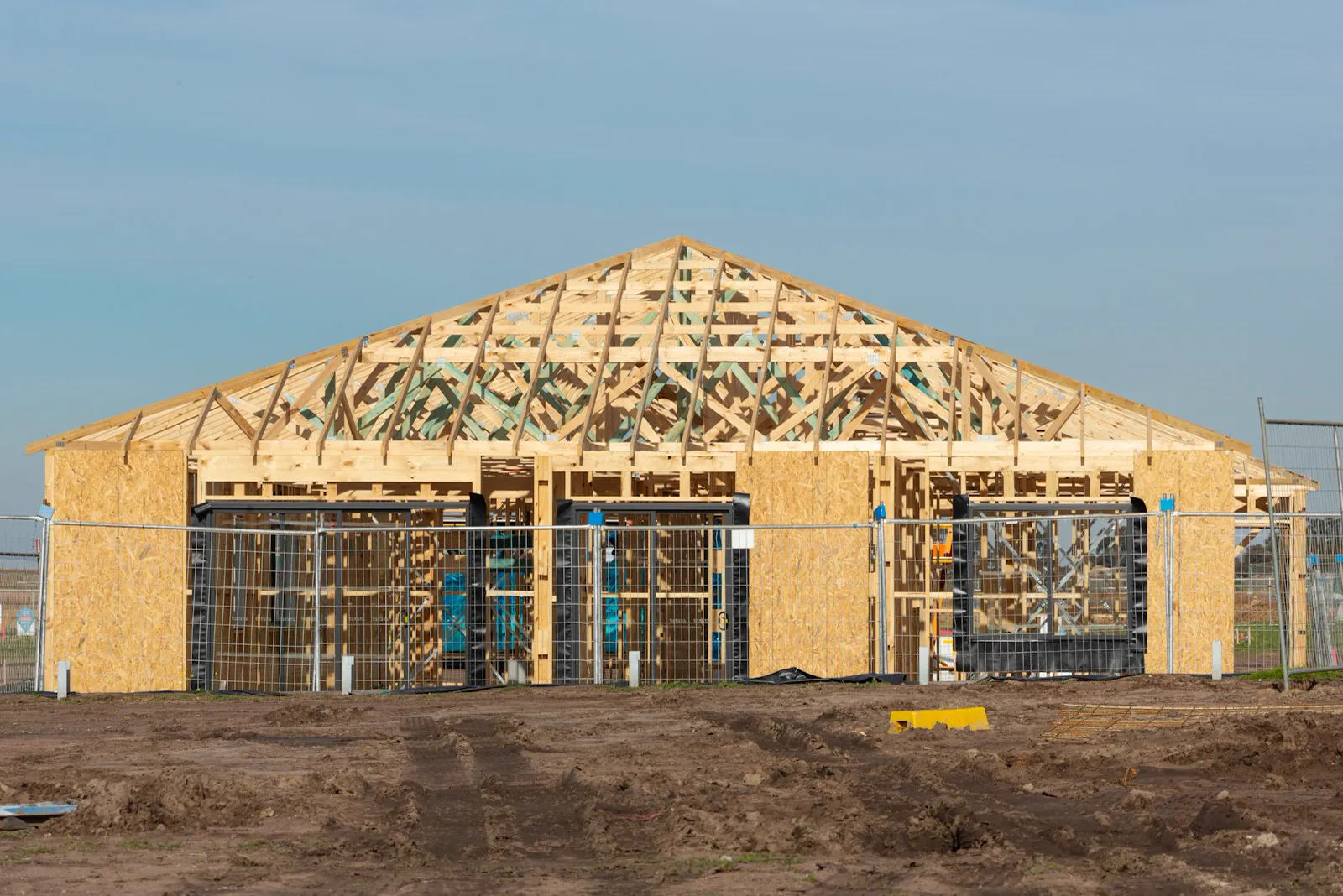
Spec Home
- Timeline 30–60 days
- Customization Almost none
- Best for Buyers on a hard deadline
- Pricing Discounted or incentivized
Everything you need to know before you buy new in Chicagoland.
Hey, I'm Moses.
If you're reading this, you're probably standing somewhere on the spectrum between "I'm thinking about new construction" and "I'm walking into a model home this weekend." Wherever you are on that spectrum, I wrote this guide for you.
Here's the truth about new construction in Chicagoland: it's the most exciting purchase most families will ever make, and it's also one of the most lopsided. Builders bring teams of attorneys, lenders, sales agents, and decades of experience to the table. Most buyers bring excitement, a Pinterest board, and the assumption that the friendly person at the sales office is on their team.
They're not. Not because they're bad people — most of them are great — but because they work for the builder. Their paycheck depends on closings happening on the builder's terms. You deserve someone on your side.
This guide is what I'd tell a close friend who called me tonight and said, "Moses, we're thinking about buying new construction. What do we need to know?" Twelve chapters. Three interactive tools. Every number, contract clause, financing trick, and timeline trap I think a Chicagoland buyer should walk into a builder's sales office knowing.
On new construction, you almost never pay extra for me — builders budget for buyer's agent commission as part of nearly every sale, and the price is typically the same whether you walk in alone or with representation. (Compensation is negotiable, and I put my number in writing before you commit to anything.) What changes is whether someone is reading the contract for you, sitting at the design center making sure you don't get upsold into a six-figure mistake, and showing up to the pre-drywall inspection because there's literally no other window to see what's behind your walls.
Read this guide. Take notes. Highlight what matters. And when you're ready to talk — about a community, a builder, a contract, or just whether new construction is even the right move for your family — you know where to find me. I answer my own phone.
What kind of new construction are you actually buying?
Not all new construction is the same. The type you buy changes everything — your timeline, your budget, how much say you have, how much risk you carry.
There are four flavors. Most buyers don't know the difference until they're already in conversation with a builder.
Different builders specialize in different types. D.R. Horton and Lennar move a lot of spec and quick move-in inventory. Toll Brothers leans semi-custom. Pulte sits in the middle.
If your timeline is "we need to be in by August because the kids start school," you're shopping spec — and walking into a Toll Brothers community is a waste of an afternoon. Know what you're shopping for before you shop. Most buyers reverse this and fall in love with a model that doesn't match their timeline or budget.
Most buyers anchor on the base price, then get hit by five-to-seven figures of cost they didn't plan for. Enter your numbers to see your true all-in cost.
Where builders are building — and how to vet them before you fall in love.
New construction clusters in a few specific corridors. Knowing where activity is concentrated, and how to actually research a builder, gives you a head start most buyers don't have.
For relocation buyers, school district is often the single biggest driver of long-term value. In Naperville, the D203 vs. D204 distinction has a meaningful impact on resale — and the same builder will charge different prices for identical homes depending on which district the lot falls into.
The sales agent isn't obligated to tell you the boundary lines — and they sometimes blur. Learn the district before you fall in love.
Search the builder name + "Chicago" on bbb.org. Look at the Illinois regional office specifically. Note complaints relative to local sales volume, and read three or four recent ones in full.
Google the subdivision name, not just the builder. "Stonebridge Plainfield reviews." This surfaces real owner experiences and often turns up resident Facebook groups.
The single most useful thing you can do. Find one they finished 5–10 years ago. How are the homes holding up? Active for-sale signs (high turnover signals problems)? Talk to a homeowner if one's outside.
Search Cook / DuPage / Will County's civil division for the builder name. Active and recent lawsuits — especially from homeowners — are public record and tell a story marketing doesn't.
New construction is no longer a niche choice — it's a third of the market.
Nearly double pre-pandemic levels. When a third of the market is new construction, knowing how to buy it well isn't optional.
The mistake that costs buyers their representation — usually before they realize it.
This is the chapter most buyers never read in time. If you take one thing from this guide and ignore everything else, take this one.
Most national builders enforce a "first visit" rule. The first time you walk into a model home, you fill out a registration card asking your name, contact info, and — critically — whether you're working with an agent.
Write "none" or leave it blank and you've told the builder you're unrepresented. Many builders then refuse to add an agent later. Your right to representation is gone for that builder, in that community, for the entire transaction.
Buyer's agent commission on a $625,000 home — typically paid by the builder, not by you.
It's 2–3% of the sale, part of the builder's normal cost of sale. Go alone and the builder simply keeps it — your price is identical. The only thing that changes is whether someone is in your corner.
Even just to look. Even "we're just driving through this weekend." One visit can close the door.
A call or email to the community's sales team that documents your representation before you walk in. Takes me two minutes.
Some protect representation for 30 days. Some indefinitely. Some require the agent physically present on the first visit. We figure out the rule before we move.
Always. If the card has no field for it, write it in. If the sales agent says "you don't need to put that," you absolutely do.
The builder's sales agent is going to be friendly, professional, knowledgeable. They'll make you feel taken care of. None of that changes who pays them.
Their commission depends on closing the home at the best terms for the builder. The contract was written by the builder's attorneys. The lender they recommend has a financial relationship with the builder. Every piece is structured to keep you inside the builder's ecosystem.
That doesn't make them bad people. It makes them the wrong people to be your only source of information.
The builder's lender deal isn't the deal it looks like.
This is where builders make some of the most invisible money in the transaction. Price negotiation is where the visible competition is — so they pour their margin into financing, where the math is harder to compare.
Builders routinely offer $5,000–$15,000 (sometimes more) in closing credits or rate buydowns if you use their preferred lender. On the surface, free money. Take it, right?
Not always. Builder-affiliated lenders often offset the incentive by quoting a slightly higher rate, higher origination fees, or both. The $10,000 credit looks great — the 0.25% higher rate over 30 years on a $500K loan is about $25,000 in extra interest.
You can lose money by taking free money. The only way to know is to actually compare: same loan, same down payment, same property, same date.
Enter both lender offers. The tool calculates which is actually cheaper over 5, 10, and 30 years — and shows you the dollar difference.
On a 9–18 month build, rates can move 1%+. Extended rate locks cost 0.25–1% of the loan upfront ($1,500–$6,000 on $600K).
The bank funds the build in stages ("draws") and converts to a standard mortgage at closing.
When you sign that 60-page contract, here's what you're actually signing.
A builder's purchase agreement isn't a standard Illinois contract. It's a custom document written by the builder's legal team to protect the builder's timeline, budget, materials, and margins — not yours.
You need an Illinois real estate attorney. $500–$1,000 on a $600K home is 0.1% of the price, and one of the most valuable line items in the transaction.
Lets the builder swap any material for one of "equal or greater value" — intentionally broad, often without your approval.
Push for: specific brand and model numbers. "GE Profile dishwasher, model PDT775SYNFS" — not "stainless dishwasher of equal value."
Most contracts allow 6–12 month extensions without penalty. Triggers: weather, supply chain, "acts of God," labor, permits.
Push for: a clear limit on how long they can extend before you can cancel and recover your deposit.
Deposits run 2–5% of price — $12,000–$30,000 on $600K — and go non-refundable at milestones (foundation, framing, drywall).
Ask: "At what milestones does my deposit become non-refundable, and what still entitles me to a refund?" Get it in writing.
Many contracts disclaim implied warranties and limit you to the builder's own program. You have statutory rights in Illinois you should not unknowingly waive. (More in Chapter 9.)
Binding arbitration favors the party that uses it repeatedly — the builder — and usually blocks class actions, which matters when issues affect a whole community.
Ask your attorney: "Can that clause be removed or modified?"
Illinois has an attorney review period — typically five business days after signing — when your attorney can negotiate modifications. But builder contracts are often written outside the standard IAR form and may not include it automatically.
Your attorney can negotiate to add one — and should — but only if you have an attorney engaged before you sign.
Don't sign a builder contract without an attorney looking at it first. That sentence is worth re-reading.
Where builders make their highest-margin money — and how to walk in with a plan.
The design center is beautiful, overwhelming, and expensive by design. That's not an accident.
Builders generate significant profit on upgrades, and the room is engineered to maximize the chance you say yes to as many as possible.
On a $450K home that's $22,500–$54,000. On $750K, $37,500–$90,000.
That money gets spent whether you have a plan or not. The only question is whether it adds value to your home — or disappears into builder markup.
A specific example to anchor on. Through the builder, that quartz is installed before you move in and financed into the mortgage. Wait until after closing and you pay cash, and live with the original for a few months while you arrange the swap.
Sometimes the markup is worth the convenience. Sometimes it isn't. Run the math on each major item — don't decide in the showroom.
Upgrade pricing is often negotiable — especially at the end of a quarter or sales phase. Builders have monthly and quarterly targets. In the design center during the last two weeks of a quarter, asking for an upgrade credit (or comped upgrades) often works. The sales agent has discretion.
Set your upgrade budget before you walk in, and write it down. The room is designed to break that number — that's the entire business model.
Everything behind a wall — structural options, rough-ins, wiring — is pennies now and a renovation later. Everything on the surface — flooring, paint, hardware — you can do better and cheaper after you have the keys.
Decide the budget in advance, and protect it.
What to walk in with — and what their answers actually mean.
Most buyers rely on the sales agent to tell them what they need to know. The agent then tells them what the builder wants them to hear.
These questions flip that. A good builder answers confidently. Evasive answers are information too.
If an agent gets uncomfortable, dismissive, or evasive with any of these — that's one of the most useful pieces of information in the entire process.
A great builder welcomes these questions; they confirm a serious, informed buyer, which makes everything smoother. The builders who get nervous about questions are the ones you most need to be careful with.
"Brand new" does not mean "problem free." Three windows you can't get back.
Builder quality-control checks are internal reviews by the builder's team — focused on code compliance and their own standards. They are not on your side.
New homes regularly have real issues that go undetected without an outside professional.
The most important inspection of your life as a new construction buyer. Once drywall is up, you can't see the systems behind your walls again — for as long as you own the home. Issues found here are fast and cheap; the same issues after closing mean cutting open walls.
Inspectors find: bad insulation, missing fire blocks, electrical wires touching plumbing, ducts that connect to nothing, framing issues, water-leak entry points, settling.
A comprehensive independent inspection of the finished home — mechanical deficiencies, cosmetic defects, installation issues the builder's QC missed. The report becomes your punch list: items the builder fixes before closing, or commits in writing to fix shortly after.
The most overlooked inspection in the process. Settling cracks, HVAC across seasons, drywall pops, weather-cycle issues only emerge after a year. An 11-month inspection gives you a punch list to submit before your Year 1 warranty expires. Year 1 issues are typically covered; Year 2 typically aren't.
All three phases. On a $600K home, roughly 0.2% of the price.
Choose an inspector who specializes in new construction. Ask: "How many pre-drywall inspections did you do last year?" Fewer than 20 — find someone else.
What 1-2-10 actually covers — and the Illinois law that protects you beyond it.
The marketing makes 1-2-10 sound comprehensive. The reality is more limited than buyers expect — and missing the deadlines built into it means losing coverage you paid for.
Drywall, flooring, trim, paint, exterior finishes, doors, windows — most everything visible inside the home.
Installation defects in electrical, plumbing, and HVAC specifically.
Foundation failures, load-bearing wall issues, roof framing failures — must materially affect structural integrity.
Every Illinois new-home sale carries an Implied Warranty of Habitability under common law — independent of the builder's written warranty. The builder must deliver a home that is habitable, structurally sound, and free of latent defects, regardless of what their warranty says.
Many contracts try to disclaim it. Illinois courts require any disclaimer to be clear, specific, and conspicuous — fine print isn't always enforceable.
Don't assume that because the builder's warranty expired, you're out of options. Talk to an attorney.
Repeating this from Chapter 8 because it's that important: schedule an independent 11-month inspection. The professional punch list it produces becomes your formal Year 1 warranty submission.
This single step recovers more buyer money than almost any other action in the entire post-closing experience.
Builder-controlled boards, reserve funds, and the assessments nobody warned you about.
Most new communities are governed by an HOA. What buyers miss: in a new development, the builder controls the HOA until enough homes sell — and the budget, reserves, and rules they set become your obligation.
Until 75–90% of homes sell, the builder controls the board — sets rules, budget, and reserves — while residents pay dues with no vote. Builders keep initial reserves low so the community shows well to new buyers.
Three to seven years after closing, residents discover reserves are inadequate and the HOA issues a special assessment — commonly $500 to $5,000+ per household, sometimes higher.
| Community type | What's included | Monthly |
|---|---|---|
| Standard subdivisions | Basic common-area maintenance | $40–100 |
| Mid-tier communities | Clubhouse, pool, basic amenities | $100–250 |
| Master-planned | Full amenities, pools, fitness, trails | $250–500+ |
| Townhomes / detached condos | Exterior maintenance included | $200–500+ |
Builders sometimes start dues low and raise them at build-out. Ask what dues are projected at full completion, not just today.
Not the builder's summary — the full document, before closing. Your attorney can interpret the legal language.
Get all of this in writing — your attorney reviews it as part of the transaction. Red flags here become negotiating leverage before closing, or grounds to walk away.
Five steps, one escrow trick, and the punch-list rules most buyers don't know.
New construction closing is more complex than resale. There's a specific sequence — and a few protections along the way — that most buyers don't learn until they're in the middle of it.
The builder's rep notes items to address before closing. It is not neutral and not a substitute for an independent inspection. Do both.
Your inspector evaluates the finished home — mechanical, installation, code, cosmetic. This report is your leverage. Items go on the formal punch list.
Get written confirmation of what's fixed before closing, what's fixed after with deadlines, and what's handled under warranty.
Verbal promises at this stage are worth nothing. If it's not in writing with a date, it doesn't exist.
If punch-list items aren't done by closing day, the builder can hold back funds in escrow until they are:
Most builders resist — they want the full check. But closing happens on your timeline.
Verify punch-list items are actually done. If not: delay closing, negotiate a holdback, or proceed under specific written commitments. Your last leverage point before signing.
In the first 30 days, document everything. Photograph every issue. Submit warranty claims promptly — even small ones. The pattern you set in the first month shapes how the builder handles you for the next year.
The decisions you make today determine what your home is worth in 2034.
Buyers focus on the home they're buying today. The smart ones also think about the home they're selling in 7–10 years.
Lot, elevation, and floor plan matter more than anything you do after closing. Some are reversible. Most aren't.
Builders price premium lots higher because they sell faster.
Buyers form opinions before they reach the front door.
A $15,000 elevation upgrade at construction often returns $20,000+ in resale 5–10 years later — the exact opposite of most design-center upgrades. The base elevation costs the builder the least, and costs you the most at resale.
Enter four inputs about the home you're considering. The tool produces a Resale Risk Score with the factors driving it — and what you can do about them.
Lot selection and elevation are the two decisions with the greatest long-term impact on resale — and both are made before construction even begins. Once you sign, they're essentially permanent.
Treat the lot and elevation conversation as the most important conversation of the entire transaction. Because it is.
You made it.
If you've read this far, you now know more about buying new construction in Chicagoland than the vast majority of buyers who walk into a sales office on any given Saturday. That's not flattery — it's the truth. Most buyers don't read the guide. You did.
New construction is one of the best ways to build long-term wealth and create the home your family deserves. Done right — with the right representation, contract, and inspections — it's a great investment in money and quality of life. Done wrong, alone, without protection, it can be one of the most expensive lessons a family ever learns.
You don't have to do it alone. The contract clauses, the lender comparison, the design-center math, the warranty deadlines, the lot premiums, the HOA reserves — that's what I do. To be on your side, every step, from the first phone call through closing day and beyond.
And on nearly every new build it costs you nothing out of pocket — the builder pays my commission, and if one won't, you'll know before you sign. Walking in alone doesn't save you money. It just means nobody is reading the fine print.
When you're ready — tonight, next month, or six months from now — you know where to find me. I answer my own phone.